

API as Architecture
One contract for APIs, systems, and agents.
Define APIs, services, databases, and AI tools from one protobuf contract. ApiHug keeps engineers and agents on the same system model.
$ iex (irm 'https://raw.githubusercontent.com/apihug/apihug.github.io/main/helper/apihug-install.ps1')syntax = "proto3";service OrderService { rpc Place () returns () { }; }}public class OrderController { @PostMapping("/order/place") public place() { // Generated by ApiHug }}The Blueprint
The operating language between AI and enterprise systems.
Single contract. Shared runtime. Security, governance, observability, and collaboration across the stack.
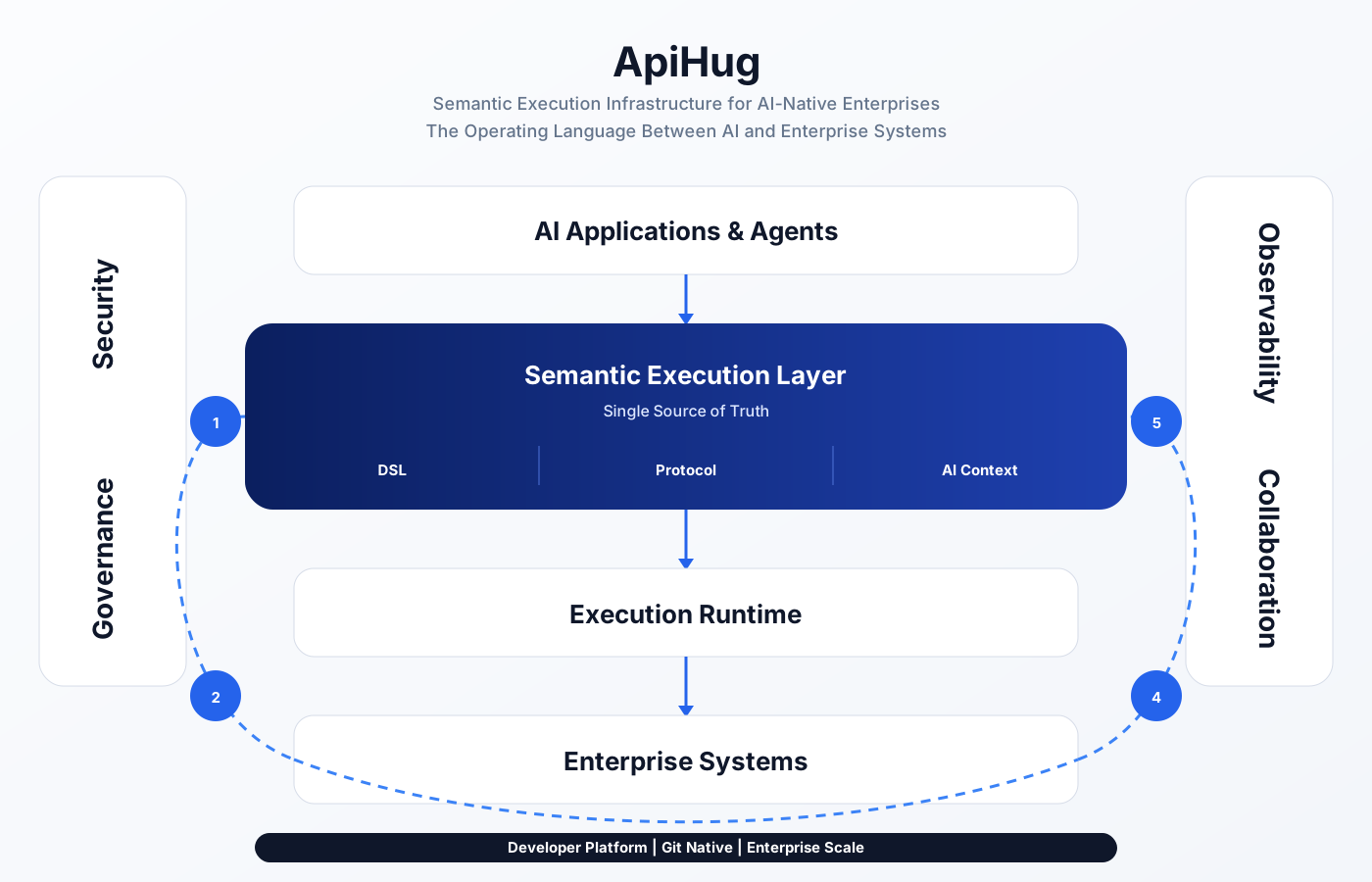
Proto Semantic
Protobuf with execution semantics.
ApiHug extends protobuf with routing, validation, persistence, mocking, and versioning. Structured semantics stay in the contract, where engineers and LLMs can use them reliably.
Routes, methods, and pagination declared on RPCs. Generates OpenAPI, Spring controllers, and client SDKs.
service OrderService { // Service-level config option (hope.swagger.svc) = { path: "/order"; description: "Order Service"; } rpc Place (PlaceOrderRequest) returns (OrderPlacedResponse) { option (hope.swagger.operation) = { post: "/place"; description: "place a new order"; }; } rpc Query (QueryOrderRequest) returns (OrderView) { option (hope.swagger.operation) = { get: "/query"; pageable: true; }; }}message Movie { string name = 1 [(hope.swagger.field) = { description: "name of the movie"; example: "The Lord of the Rings" empty: FALSE; mock: { nature: MOVIE } max_length: 64 }]; MovieLevel level = 2 [(hope.swagger.field) = { description: "level of the movie"; example: "PG_13" empty: FALSE; }]; uint32 year = 3 [(hope.swagger.field) = { description: "publish year"; example: "2022" }];}enum MovieLevel { PG_13 = 0 [(hope.constant.field) = { code: 1, message: "PG-13" }]; R = 1 [(hope.constant.field) = { code: 2, message: "R" }]; NC_17 = 3 [(hope.constant.field) = { code: 4, message: "NC-17" }];}// 40+ built-in nature types for mock dataenum Nature { ANIMAL = 0; // random animal names AVATAR = 2; // avatar image URLs BOOK = 4; // book titles COLOR = 8; // color names COUNTRY = 10; // country names CURRENCY = 11; // currency names DATE_AND_TIME = 12; // random dates DOG = 13; // dog breed names FOOD = 14; // food names MOVIE = 20; // movie titles NAME = 22; // person names EMAIL = 24; // email addresses PHONE = 26; // phone numbers URL = 36; // random URLs}Entity Design
From proto to persistence, automatically.
Define entity structure in protobuf. ApiHug generates entities, migrations, and CRUD so schema, code, and API stay aligned.
message Movie { string name = 1 [(hope.persistence.column) = { name: "NAME", description: "Name of the movie", type: VARCHAR, length: { value: 64 } }]; string description = 2 [(hope.persistence.column) = { name: "DESCRIPTION", type: VARCHAR, length: { value: 255 } }]; MovieLevel level = 3 [(hope.persistence.column) = { enum_type: STRING, type: VARCHAR, length: { value: 16 } }]; option (hope.persistence.table) = { name: "MOVIE", wires: [IDENTIFIABLE, AUDITABLE] };}<!-- Auto-generated by ApiHug --><createTable remarks="Movie" tableName="MOVIE"> <column name="ID" type="BIGINT" autoIncrement="true"> <constraints primaryKey="true" unique="true" /> </column> <column name="NAME" type="VARCHAR(64)"> <constraints nullable="false" /> </column> <column name="DESCRIPTION" type="VARCHAR(255)" /> <column name="LEVEL" type="VARCHAR(16)" /> <column name="CREATED" type="TIMESTAMP" /></createTable>@Entity@Table(name = "MOVIE")public class Movie implements Identifiable<Long> { @Id @GeneratedValue private Long id; @Column(name = "NAME", length = 64, nullable = false) private String name; @Column(name = "DESCRIPTION", length = 255) private String description; @Enumerated(EnumType.STRING) @Column(name = "LEVEL", length = 16) private MovieLevel level;}Enterprise Factory
One definition. Everything generated.
One proto contract generates services, database artifacts, SDKs, tests, and AI tooling. The same definition serves engineers, clients, and agents.
Protobuf Contract
Describe the API in Protocol Buffers: structured, typed, and machine-readable.
Spring Boot Services
Controllers, DTOs, and service stubs generated with minimal manual wiring.
Database Schema
Tables, indexes, and migrations generated from entity metadata.
MCP & Agent Tools
MCP servers and typed tools so agents can call your APIs safely.
Agent Native
Make your APIs ready for AI agents.
Agents are now API consumers. ApiHug gives them typed tools, governed access, and the same contract model your engineers already use.
MCP Server Generation
Generate MCP servers from API contracts so agents can discover and invoke services without custom glue.
Tool Schema & Catalog
Turn endpoints into typed tools with clear inputs, outputs, and pagination.
Agent Permission Model
Apply RBAC and audit trails so agent actions stay within enterprise boundaries.
Semantic API Contracts
Use structured protobuf contracts that reduce ambiguity for both humans and LLMs.
SDK & Language Bindings
Generate client bindings from one contract for Java, TypeScript, Python, and Go.
Enterprise Governance
Carry observability, tracing, and compliance through generated artifacts.
Enterprise Intent Compiler
From business intent to deployed systems. ApiHug gives humans and AI agents one unambiguous contract across the delivery lifecycle.